.png)


English Language 英國語文科
| Curriculum | ||||||||||||||||||||||||||||||||||||||||||||||||||||||||||||||||
|
||||||||||||||||||||||||||||||||||||||||||||||||||||||||||||||||
| Life-wide Learning Activities | ||||||||||||||||||||||||||||||||||||||||||||||||||||||||||||||||
|
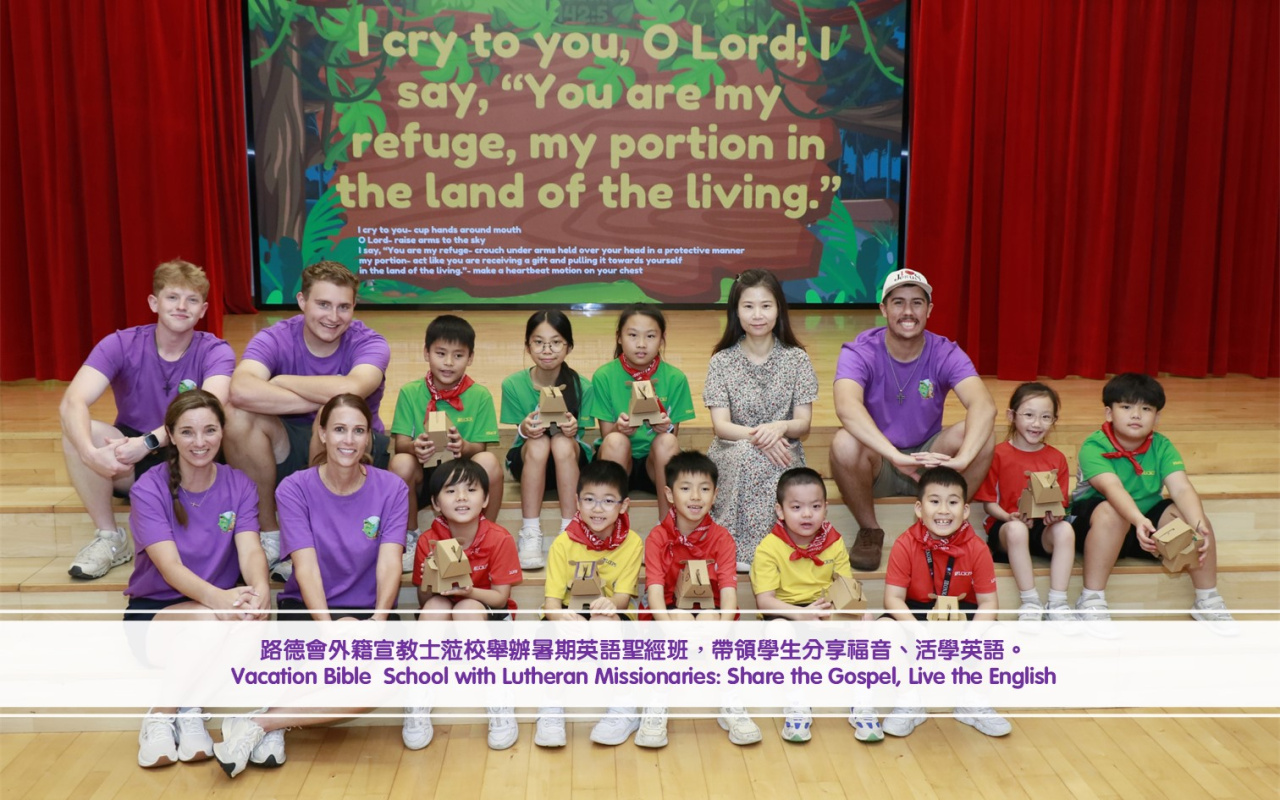
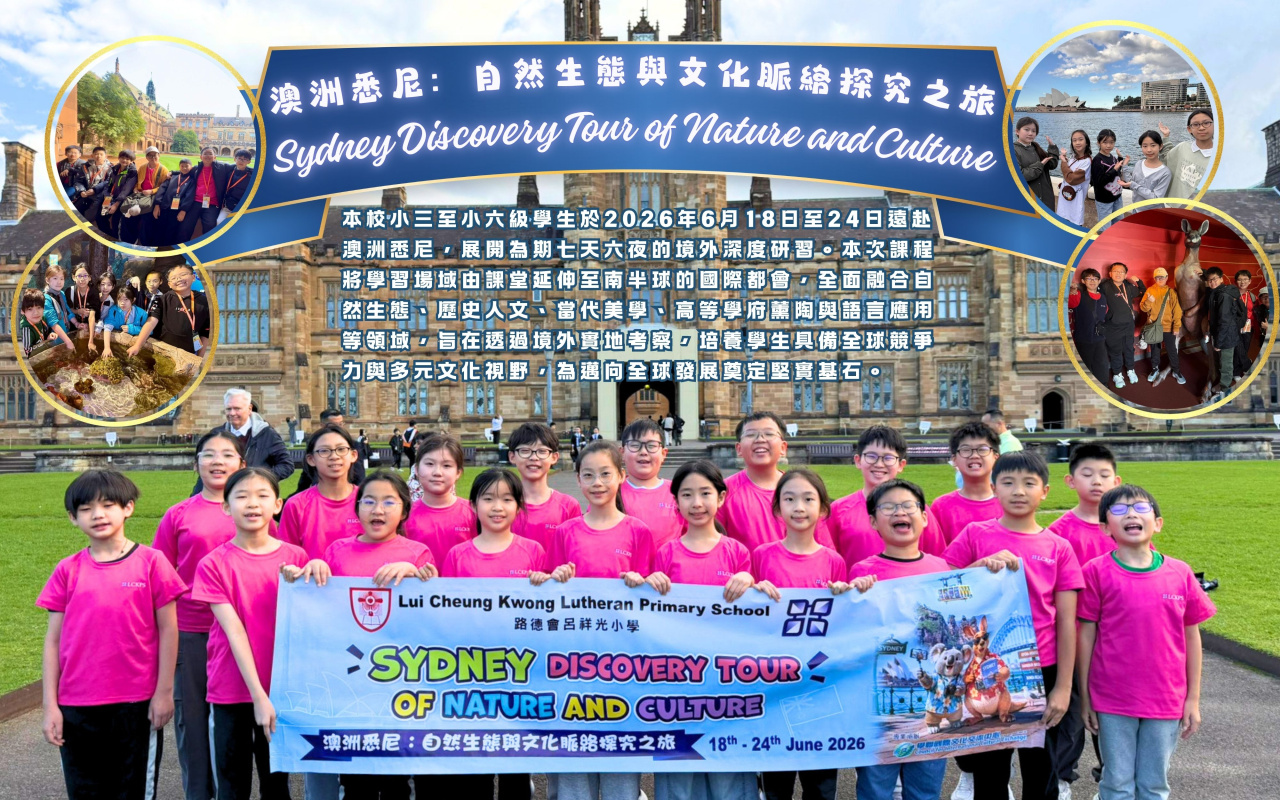
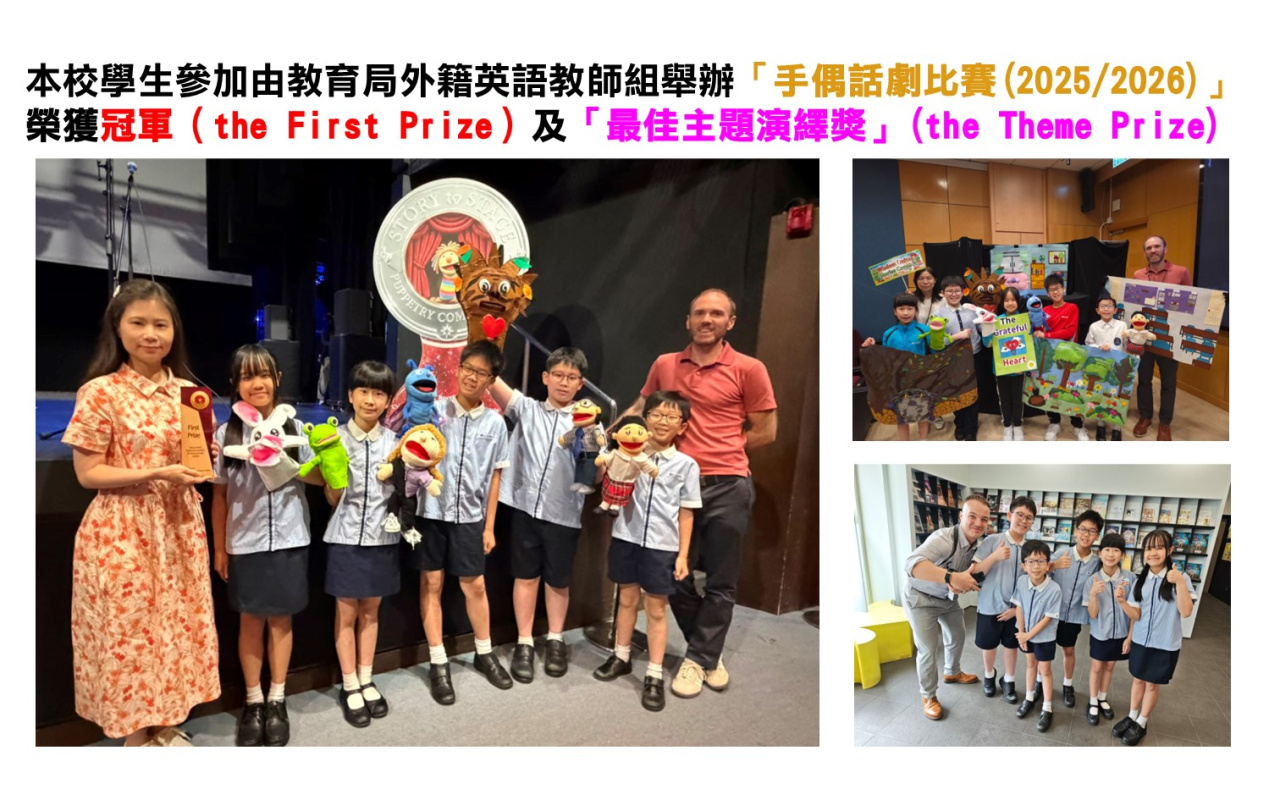
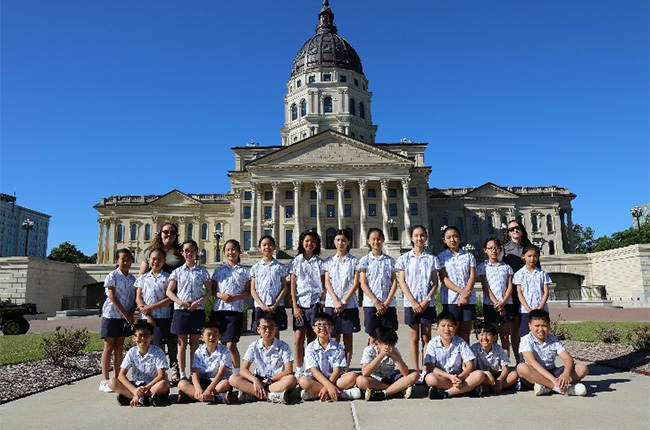
1. Story Fun Break! During recess, our native English teachers read aloud interesting books using lively puppets and fun interactive games. This engaging approach encourages students to make good use of their break time and develop a love for reading English storybooks. Students actively participate in the storytelling, listen attentively and naturally learn new English words. The relaxed and playful atmosphere helps reduce their fear of speaking and builds their confidence in using English outside the classroom. 2. Storytelling through Puppetry In daily English lessons, junior primary students are introduced to a variety of English stories with the use of puppets to build their comprehension and listening skills. After listening to a story, students practise short dialogues using hand puppets. The puppets serve as a safe “shield”, helping students feel more at ease when expressing themselves. This approach not only lowers their anxiety but also encourages them to speak more willingly. As a result, students’ oral English skills improve gradually in a fun and supportive learning environment. 3. Elite Puppetry Team After completing the storytelling programme, the school selects a group of elite students to form the Elite Puppetry Team. These students receive focused training to perform short English puppet plays. The training aims to enhance their English fluency, stress, intonation and pacing. Through regular practice and stage performances, students become more confident in their speaking abilities. They learn to express characters’ emotions using their voices and develop better control over pronunciation and intonation. This experience greatly improves their overall English oral proficiency. Our puppetry team has also achieved remarkable success in the Story to Stage Puppetry Competition for Primary Schools, organised by the NET Section of the Education Bureau. Over the past few years, the team has received a number of prestigious awards, including Merit, First Runner-up, and the Outstanding Presentation of the Theme of Love Award. These achievements reflect the team's dedication, creativity and excellent use of English in performance. 4. English Fun Day Our annual English Fun Day is designed around a different theme each year. Through a variety of interesting English activities, students learn about different themes and our country while using English in real-life situations. The event helps them see that English is not just a subject in textbooks but a living language used in everyday life. After the Fun Day, a range of extension activities are organised to further develop students’ writing skills, as well as strengthen their national identity and positive values. 5. Bringing Stories to Life: English Drama Competition Every year, our campus transforms into a stage for the highly anticipated English Drama Competition. Held on our annual English Day, this event encourages students to step into the shoes of the characters they’ve read. By performing adapted scripts of the books they have just finished reading, students develop confidence, public speaking skills, and a deeper emotional connection to literature. It’s more than just a play; it’s a celebration of teamwork and creative expression. 6. Interactive Learning: Fun English Activities Learning English extends far beyond the textbook through our Fun English Activities. We host professional English puppetry shows that captivate our younger learners, while our "Book Talk" initiative invites students to become digital creators by filming short videos to share their favorite stories with peers. To keep the momentum going, our Reading Bingo challenges turn literacy into a rewarding game, ensuring that every page turned is a step toward a new achievement. 7. A Smooth Start: Kindergarten to Primary Transition We understand that the leap from kindergarten to primary school is a big milestone, which is why our curriculum includes a dedicated Transition Program. We focus on building a supportive and gentle immersion environment where new students feel at home with the English language. Through play-based orientation sessions and bridge activities, we ensure that every child enters Primary 1 feeling comfortable, capable, and excited to begin their new academic journey with us. 8. One-minute book sharing Students are encouraged to read their favorite English books and, within one minute, share with their classmates (or even the whole school) the story and the values they learned. This boosts the school's reading atmosphere and promotes proper values, while also building students' public speaking skills and confidence. 9. Fun learning values education Through book sharing with native-speaking teachers during the morning assembly, students learn various values alongside their schoolmates. These activities instill and help them internalize positive values, while educating them to become good citizens with proper values—in an interesting and fun way. 10. Overseas Study Trip Previously, we took students on a missionary trip to Topeka, Kansas, USA, where they explored American culture, experienced local day to day encounters, and had opportunities to learn native English. Our students lived with host families, visited various sightseeing spots, and participated in the Vacation Bible School. Now, we are planning to take students to Sydney, Australia, for an exploration of natural ecology and cultural context.
|
||||||||||||||||||||||||||||||||||||||||||||||||||||||||||||||||
|
||||||||||||||||||||||||||||||||||||||||||||||||||||||||||||||||
.jpg)
.jpg)
.jpg)
.jpg)
.jpg)
.jpg)
.jpg)
.jpg)
.JPG)
.jpg)
.jpg)